RV Financing Bad Credit Near Me
RV financing for bad credit near me can seem daunting, but options are available. This guide explores various financing strategies, from understanding different loan types to identifying lenders specializing in bad credit. We’ll delve into crucial factors influencing loan approval, like credit scores and down payments, and provide a step-by-step application process.
Securing RV financing with less-than-perfect credit often requires careful research and strategic negotiation. We’ll also examine the costs associated with financing, helping you make informed decisions. Different lenders have varying criteria and terms, so comparing offers is essential to securing the best deal. This comprehensive overview provides the knowledge and tools to navigate the process successfully.
Understanding Financing Options for RVs with Bad Credit
Finding the right RV financing option when you have less-than-perfect credit can feel daunting. However, various avenues exist to secure the recreational vehicle of your dreams. This discussion delves into the diverse financing options available, highlighting the key differences and considerations for borrowers with bad credit.
Securing an RV loan with less-than-ideal credit requires careful research and understanding of the available options. The choices vary greatly, from traditional financing avenues to more specialized programs, each with its own set of terms and conditions. This section details the key aspects of RV financing for those with bad credit, including secured versus unsecured loans, different loan types, and interest rate comparisons.
Secured RV Loans
Secured RV loans, as the name suggests, use the RV itself as collateral. This provides lenders with a safety net, reducing the risk associated with the loan. For borrowers with bad credit, secured loans can be more accessible as the collateral mitigates the lender’s risk. A significant benefit is the potential for lower interest rates compared to unsecured loans, given the reduced risk. However, if the borrower defaults on the loan, the lender can repossess the RV. This is a crucial factor to consider when making a decision.
Unsecured RV Loans
Unsecured RV loans, conversely, do not require collateral. These loans rely solely on the borrower’s creditworthiness and ability to repay. For individuals with bad credit, securing an unsecured loan is typically more challenging due to the higher risk for the lender. Interest rates tend to be higher compared to secured loans, reflecting the increased risk. The absence of collateral means there’s no risk of losing the RV in case of default.
Types of RV Financing Programs
Numerous financing programs cater to diverse needs and credit situations. These programs often involve different interest rates, loan terms, and application processes. Dealerships and financial institutions may offer various options, from standard loans to specialized programs designed for borrowers with less-than-perfect credit.
- Traditional RV Loans: These loans are often offered by banks and credit unions, following standard lending criteria. The process typically involves credit checks and appraisals. They are often a more accessible option for borrowers with fair to good credit.
- Dealer Financing: Many dealerships have their own financing options, which can be tailored to specific customer needs. They might offer more flexible terms, but the interest rates may vary.
- Specialized RV Financing Companies: These companies often specialize in financing recreational vehicles, including those for borrowers with less-than-ideal credit. Their programs may involve higher interest rates but offer more accessible options for borrowers with bad credit.
Interest Rates and Loan Terms
Interest rates and loan terms for RV financing are directly correlated with the borrower’s creditworthiness. Individuals with bad credit can expect higher interest rates and potentially shorter loan terms compared to those with excellent credit. This reflects the increased risk for the lender.
| Financing Program | Loan Amount | Interest Rate | Repayment Terms | Application Process |
|---|---|---|---|---|
| Traditional RV Loan | $20,000 – $100,000+ | 6-12% | 36-60 months | Extensive credit check, income verification |
| Dealer Financing | $15,000 – $75,000+ | 7-15% | 36-60 months | Faster process, potentially less stringent credit check |
| Specialized RV Financing | $10,000 – $50,000+ | 10-20% | 24-48 months | Streamlined application, typically with pre-approval |
Identifying Dealerships and Lenders Specializing in Bad Credit RV Financing
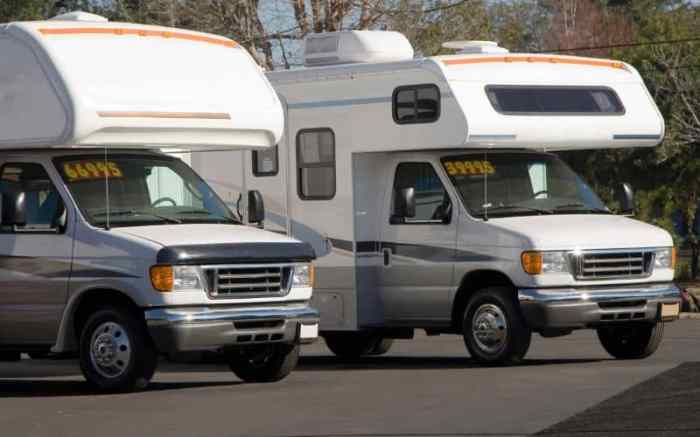
Source: rvingknowhow.com
Finding the right RV financing option when you have less-than-perfect credit can feel daunting. However, specialized lenders and dealerships are readily available to assist individuals with diverse credit histories. This section will Artikel strategies for locating these resources and understanding their approach to loan applications.
Identifying lenders and dealerships specializing in bad credit RV financing requires proactive research and careful consideration. Not all lenders and dealerships operate under the same standards, and those catering to borrowers with less-than-ideal credit often employ unique strategies to assess loan applications. Understanding these criteria can empower you to make informed decisions and increase your chances of securing favorable financing terms.
Identifying Specialized Lenders and Dealerships
Finding lenders and dealerships focused on bad credit RV financing necessitates thorough online research. Numerous online platforms and financial websites offer comprehensive databases of lenders. These platforms often feature specific filters allowing you to identify lenders known for working with individuals with a variety of credit profiles. Directly contacting dealerships is another crucial step, as many offer financing options through in-house lenders. Look for dealerships that prominently advertise their willingness to work with borrowers with less-than-perfect credit.
Criteria for Evaluating Loan Applications
Specialized lenders and dealerships typically consider a broader range of factors when evaluating RV financing applications. Beyond credit scores, they frequently assess income stability, debt-to-income ratios, and the overall financial picture. Some lenders may also take into account the applicant’s down payment, length of employment, and other factors. The specific criteria will vary depending on the individual lender and their internal policies. This evaluation aims to assess the borrower’s ability to repay the loan, even with a lower credit score. For instance, a steady job and a substantial down payment can mitigate the risk for the lender.
Different Lending Options
Lenders offering RV financing options for those with bad credit often present unique financing structures. These may include low-down payment loans, co-signer loans, or loans with extended repayment terms. These options are specifically designed to help borrowers with various financial situations obtain the RV they desire. A low-down payment loan might require a higher interest rate, while a co-signer loan relies on a co-signer with good credit to guarantee the loan. Each option has advantages and disadvantages that should be carefully considered based on your financial circumstances.
Advantages and Disadvantages of Choosing Specialized Dealerships
Specialized dealerships and lenders offer various advantages and disadvantages. Advantages might include streamlined application processes, more flexible terms, and potentially lower interest rates compared to traditional lenders. However, some dealerships or lenders may have stricter eligibility requirements, or potentially higher interest rates, than traditional financing institutions. The availability of financing options may also vary between dealers. This necessitates careful research and comparison shopping to ensure that the chosen dealership aligns with your financial goals and preferences.
Comparison of Services Offered
| Feature | Lender A | Lender B | Lender C |
|---|---|---|---|
| Loan Pre-approval Process | Fast and efficient, with online application | In-person application required, potentially slower | Hybrid approach, online application followed by in-person consultation |
| Flexibility in Terms | High flexibility in terms of down payment and loan duration | Moderate flexibility in terms, but stricter guidelines for loan amounts | Limited flexibility, focusing on borrowers with stable income |
| Customer Support | Responsive and accessible via phone and email | Limited customer support hours | Extensive customer support through various channels |
This table illustrates a potential comparison of services provided by hypothetical lenders. Remember that specific services and policies may vary considerably between lenders. Thorough research and direct communication with potential lenders are crucial for obtaining accurate and relevant information.
Factors Influencing RV Loan Approval for Individuals with Bad Credit
Securing an RV loan with less-than-perfect credit can be challenging, but not impossible. Lenders meticulously evaluate various factors to assess the risk associated with approving a loan to individuals with bad credit. Understanding these factors empowers prospective buyers to strategically prepare their applications and increase their chances of approval.
Credit Score
A credit score is a critical factor in determining loan eligibility. A higher credit score generally translates to a lower interest rate and an increased likelihood of approval. Lenders use credit scores to gauge an individual’s repayment history and ability to manage debt responsibly. Credit scores reflect payment history on various accounts, including credit cards, loans, and utilities. A score below 620 often signals higher risk, making approval more difficult. However, exceptions exist, and lenders may consider other factors in combination with credit scores to make a comprehensive assessment.
Debt-to-Income Ratio (DTI)
The debt-to-income ratio (DTI) is a crucial metric that assesses the proportion of an individual’s monthly debt obligations relative to their monthly income. A lower DTI typically indicates a lower risk for lenders. Lenders analyze the applicant’s total monthly debt payments, including housing, credit cards, and other loans, compared to their gross monthly income. A high DTI may suggest financial strain and could negatively impact loan approval. For example, an applicant with a high DTI due to significant student loan payments might find it more difficult to secure an RV loan compared to an applicant with a similar credit score but a lower DTI.
Employment History
Lenders scrutinize employment history to assess the applicant’s stability and ability to consistently generate income. A stable employment history with consistent income demonstrates a greater ability to repay the loan. A history of job hopping or periods of unemployment may raise concerns about the applicant’s financial stability, potentially impacting loan approval. A long-term employment record, especially in a steady-income profession, can greatly enhance the borrower’s chances of approval.
RV Condition and Value
The condition and value of the RV directly influence the loan amount a lender is willing to approve. A well-maintained RV in excellent condition with a higher market value increases the collateral value available to secure the loan. Conversely, an RV with significant damage or a low market value might reduce the loan amount offered or even lead to denial. Lenders assess the RV’s condition and market value to determine the level of risk associated with the loan.
Down Payment
A substantial down payment demonstrates the applicant’s financial commitment to the purchase. A larger down payment reduces the loan amount and, consequently, the risk for the lender. A significant portion of the RV’s purchase price paid upfront often improves the chances of loan approval and potentially results in a more favorable interest rate. A larger down payment can mitigate the financial risk for the lender, making the applicant a more attractive borrower.
Alternative Ways to Improve Approval Likelihood
Several strategies can enhance the likelihood of RV loan approval for individuals with bad credit. Improving credit scores through responsible credit management and demonstrating consistent on-time payments on existing accounts is crucial. Obtaining a co-signer with excellent credit can strengthen the application and increase the lender’s confidence in the borrower’s ability to repay. A co-signer assumes responsibility for the loan in case of default. Additionally, demonstrating a clear and well-defined repayment plan, outlining how the borrower intends to manage the loan payments, can positively influence the lender’s decision.
Factors Affecting Loan Approval and Their Weight
| Factor | Weight (High/Medium/Low) | Description |
|---|---|---|
| Credit Score | High | A higher credit score generally indicates a lower risk for lenders. |
| Debt-to-Income Ratio (DTI) | Medium | A lower DTI indicates a lower risk of default. |
| Employment History | Medium | Consistent employment history and stable income demonstrate financial stability. |
| RV Condition and Value | Medium | A well-maintained RV with a higher market value increases the collateral value. |
| Down Payment | High | A substantial down payment reduces the loan amount and risk for the lender. |
| Co-signer (if applicable) | High | A co-signer with excellent credit can strengthen the application. |
Preparing for the RV Financing Application Process
Securing an RV loan with less-than-perfect credit requires meticulous preparation. Understanding the application process and gathering the necessary documentation will significantly increase your chances of approval. This section details the steps involved in applying for an RV loan, focusing on the essential documents and information needed.
Steps in the Application Process
The application process for an RV loan with bad credit involves several crucial steps. Begin by thoroughly researching lenders specializing in financing recreational vehicles for individuals with less-than-ideal credit scores. Next, meticulously gather all necessary documents and information. Complete the application forms accurately and submit them to the chosen lender, ensuring that all information is precise and complete. Finally, be prepared for potential follow-up questions and inquiries from the lender. Patience and responsiveness throughout the process are key.
Required Documents and Information
A comprehensive list of documents and information is vital for a smooth application process. The specifics may vary depending on the lender, but generally, expect to provide details about your financial history, creditworthiness, and the RV you wish to purchase.
Gathering Financial Documents and Information
Gathering the necessary financial documents and information requires meticulous organization. Start by collecting documents like pay stubs, tax returns, bank statements, and credit reports. Ensure that all dates, amounts, and details are accurate and legible. Maintain a clear record of every document you provide, including its date and the entity that issued it. This meticulous record-keeping will be invaluable if there are any questions or follow-up inquiries.
Checklist of Documents for RV Financing Applications
- Pay Stubs: Recent pay stubs (typically the last 2-3 months) demonstrating consistent income are essential. This showcases your regular earnings and stability.
- Tax Returns: The most recent two to three tax returns provide a detailed view of your income and financial situation over time. This helps lenders understand your overall financial picture.
- Bank Statements: Recent bank statements (typically the last 2-3 months) are crucial for verifying your account balances and transactions. This provides lenders with an insight into your current financial standing.
- Credit Reports: Obtain your credit reports from all three major credit bureaus (Experian, Equifax, and TransUnion). Review these reports for any inaccuracies or potential areas for improvement. Correct any errors promptly.
- Proof of Residence: Utility bills, lease agreements, or mortgage statements demonstrating your current residence address. This confirms your stability and address.
- Driver’s License and Identification: Provide copies of your valid driver’s license and other forms of identification. This verifies your identity and personal details.
- Vehicle Information: Provide detailed information about the RV, including the make, model, year, and VIN (Vehicle Identification Number). Include any relevant documentation, such as the title or proof of ownership.
- Pre-Approval Letter (if available): A pre-approval letter from a lender (if you have one) can strengthen your application and demonstrate your financial preparedness for the purchase.
Importance of Accurate and Complete Information
Accuracy and completeness are paramount during the application process. Inaccurate or incomplete information can lead to delays or rejection of your loan application. Lenders rely on the provided information to assess your creditworthiness and financial stability. Carefully review each document before submitting it to ensure that all details are correct and up-to-date.
Negotiating RV Loan Terms for Individuals with Bad Credit
Securing an RV loan with less-than-perfect credit can feel challenging, but effective negotiation can significantly improve your chances of favorable terms. Understanding the strategies and tactics used in these situations is crucial for securing the best possible loan. By proactively engaging with lenders and dealerships, you can often achieve a better interest rate and more manageable loan terms.
Importance of Negotiating Loan Terms

Negotiation is vital when securing an RV loan with bad credit. A well-executed negotiation can often lead to a lower interest rate, a more favorable loan term, or a reduction in fees. This proactive approach can save you substantial amounts of money over the life of the loan.
Strategies for Negotiating Favorable Interest Rates and Loan Terms
Negotiating effectively requires preparation and a strategic approach. Researching current interest rates and loan terms from various lenders and dealerships is essential. Knowing the prevailing market conditions empowers you to make informed comparisons and highlight competitive offers.
- Present a compelling case for your creditworthiness. While acknowledging past credit challenges, focus on demonstrating positive financial habits since then. This could include consistent employment, a stable address, and responsible debt management.
- Demonstrate financial stability. Provide documentation that shows your ability to manage a larger loan amount. This could include pay stubs, tax returns, or bank statements reflecting consistent income and savings.
- Explore different financing options. Consider options like co-signing with a co-borrower with excellent credit, or explore the possibility of a smaller down payment to reduce the principal amount, or an alternative loan structure. A smaller loan amount will often result in a lower interest rate.
Effective Negotiation Tactics
Crafting a compelling negotiation strategy involves understanding the lender’s perspective and highlighting your strengths.
- Be prepared to walk away. This power position allows you to negotiate from a stronger position, and to consider other offers.
- Research competitor dealerships and lenders. Knowing the rates offered by other lenders strengthens your negotiating position and allows you to compare effectively.
- Highlight your financial stability. Provide evidence of steady employment, consistent income, and a track record of responsible financial habits. This will show lenders you can manage the loan.
- Be respectful and professional. Maintain a positive and professional demeanor throughout the negotiation process. This helps build rapport and shows you are a responsible borrower.
Handling Potential Rejections or Counteroffers
Rejection is a possibility in the negotiation process. A flexible approach is key to overcoming this.
- Seek clarification. Ask for feedback on what aspects of your application can be improved to increase the likelihood of approval.
- Revisit your strategy. Based on the lender’s feedback, reassess your approach. Explore alternative loan terms or consider additional financial support, such as a co-signer.
- Compare different offers. If you receive counteroffers, compare them based on interest rates, loan terms, and fees to determine the most advantageous option.
Comparing Loan Offers, Rv financing bad credit near me
Comparing loan offers is crucial for making the best decision.
| Lender | Interest Rate | Loan Term (Years) | Fees |
|---|---|---|---|
| Bank A | 7.5% | 10 | $500 |
| Credit Union B | 8.0% | 8 | $300 |
| Dealer C | 9.0% | 12 | $700 |
Thoroughly review each offer, considering interest rates, loan terms, and fees. A comprehensive comparison will help you select the loan with the most favorable conditions.
Understanding the Costs Associated with RV Financing
Navigating the world of RV financing can feel overwhelming, especially when considering the various costs involved. Understanding these costs is crucial for making informed decisions and avoiding surprises down the road. This section delves into the key financial aspects of RV financing, providing clarity on interest rates, fees, and the overall cost of ownership.
Knowing the total cost of your RV purchase is essential. It’s not just about the sticker price; it’s about the entire financial picture, including financing charges, taxes, and potential additional expenses. A comprehensive understanding empowers you to compare different financing options and choose the one that best aligns with your budget and financial goals.
Interest Rates
Interest rates are a significant component of any loan, including RV financing. Higher interest rates translate to a larger overall cost of borrowing. Factors such as credit score, loan term, and the prevailing market interest rates all play a role in determining the interest rate offered. For instance, an individual with a strong credit history might qualify for a lower interest rate compared to someone with a less favorable credit report. The loan term also influences the interest rate, as longer terms typically come with slightly higher rates.
Fees
RV financing often comes with various fees beyond the interest rate. These fees can include origination fees, processing fees, and appraisal fees. Understanding these fees upfront is crucial for budgeting and making an informed decision. For example, an origination fee might be a flat amount, while a processing fee could be a percentage of the loan amount. Some dealers may also charge additional fees, like documentation or handling fees. Carefully review all fees associated with the loan offer before committing.
Down Payments
A down payment reduces the loan amount and can impact the interest rate and overall cost. A larger down payment generally results in a smaller loan amount, which could lead to lower interest charges and monthly payments. For example, a 20% down payment might significantly reduce the total cost of financing over the life of the loan. Consider your financial situation and the potential impact of a down payment on your budget.
Calculating Total Cost of Ownership
Calculating the total cost of ownership (TCO) of an RV includes not only the purchase price but also financing costs. This calculation encompasses the interest paid over the loan term, all fees associated with financing, and any additional expenses such as insurance and maintenance. A comprehensive TCO analysis is crucial to assess the true cost of owning an RV and ensure it fits within your financial plan.
Impact of High-Interest Rates
High-interest rates significantly increase the overall cost of an RV loan. A higher interest rate translates to a greater amount of interest paid over the life of the loan, increasing the total cost of ownership. For instance, a 10% interest rate on a $50,000 loan over 5 years will result in a substantially higher total cost compared to a 5% interest rate. Be aware of the potential impact of high interest rates on your budget.
Financing Costs Table
| Financing Cost | Potential Impact on Loan Amount |
|---|---|
| Interest Rate (e.g., 8%) | Increases the total amount paid over the loan term |
| Origination Fee (e.g., 2% of loan amount) | Directly adds to the total loan amount |
| Processing Fee (e.g., $500) | Directly adds to the total loan amount |
| Down Payment (e.g., 10%) | Reduces the loan amount and potentially lowers the interest rate and the monthly payment |
| Appraisal Fee (e.g., $250) | Directly adds to the total loan amount |
Illustrating Common RV Financing Scenarios: RV Financing Bad Credit Near Me
Securing RV financing with less-than-perfect credit requires careful consideration of various factors. Understanding common scenarios and potential outcomes can help individuals make informed decisions and mitigate risks. This section provides examples to illustrate how creditworthiness, down payment amounts, and lender policies affect RV loan approval and terms.
Scenario 1: The First-Time RV Buyer with a Moderate Credit Score
This scenario often involves a buyer with a credit score between 600 and 675. They’ve saved a significant down payment but might face higher interest rates than someone with excellent credit. Lenders will likely require a larger down payment and may offer less favorable terms.
Scenario 2: The Buyer with a Low Credit Score and Limited Savings
This individual may have a credit score below 600 and limited savings. They will likely face significant challenges securing RV financing. Lenders will likely demand a higher down payment, potentially requiring an alternative loan source, like a private party or a less conventional financing option. Approval is less likely, and the interest rate could be substantially higher, possibly exceeding 15%.
Scenario 3: The Buyer with a Good Credit Score but a High-Value RV
This buyer might have a strong credit score, but the desired RV’s value surpasses their available financing options. This scenario highlights the importance of assessing the actual amount that can be financed given the credit profile and available funds. They might need to compromise on the RV’s price or consider a co-signer.
Scenario 4: The Buyer Using a Bad Credit Loan for an RV
This buyer is likely to have a low credit score. A bad credit RV loan often comes with a higher interest rate than conventional financing. While it allows them to acquire an RV, the higher interest rate can substantially increase the total cost of the loan over time. They might need to explore options like a secured loan or a co-signer.
Scenario 5: The Buyer Seeking an RV Loan with a Shorter Term
This buyer might desire a shorter loan term for quicker debt payoff. A shorter term generally translates to higher monthly payments. Understanding the trade-offs between monthly payments and the overall cost of the loan is critical.
| Scenario | Credit Score | Down Payment | Interest Rate | Loan Term | Outcome | Mitigation Tips |
|---|---|---|---|---|---|---|
| First-Time Buyer (Moderate Credit) | 650 | 30% | 7-9% | 84 months | Loan approved, but with higher interest than ideal. | Shop around for multiple loan offers, negotiate terms. |
| Low Credit, Limited Savings | 550 | 10% | 12-15% | 72 months | Loan approval is less likely, and higher interest. | Explore bad credit RV loans, co-signer option. |
| Good Credit, High-Value RV | 750 | 20% | 5-7% | 84 months | Financing might be insufficient to cover the RV’s value. | Consider negotiating a lower RV price or co-financing options. |
| Bad Credit RV Loan | 600 | 25% | 10-14% | 60 months | Loan approved but at a higher cost. | Compare rates from multiple lenders, consider alternatives. |
| Short-Term Loan | 700 | 15% | 6-8% | 60 months | Higher monthly payments. | Weigh the benefits of shorter terms against total cost. |
Final Review
In conclusion, securing RV financing with bad credit requires a proactive approach, including thorough research into available options, understanding lender criteria, and strategic negotiation. By carefully considering loan terms, costs, and potential risks, you can significantly increase your chances of securing favorable financing. Remember, the key to success lies in understanding the specific needs of your credit situation and working with lenders who are willing to consider your unique circumstances. This guide provides a roadmap to help you find the best RV financing solution near you, tailored to your specific financial profile.